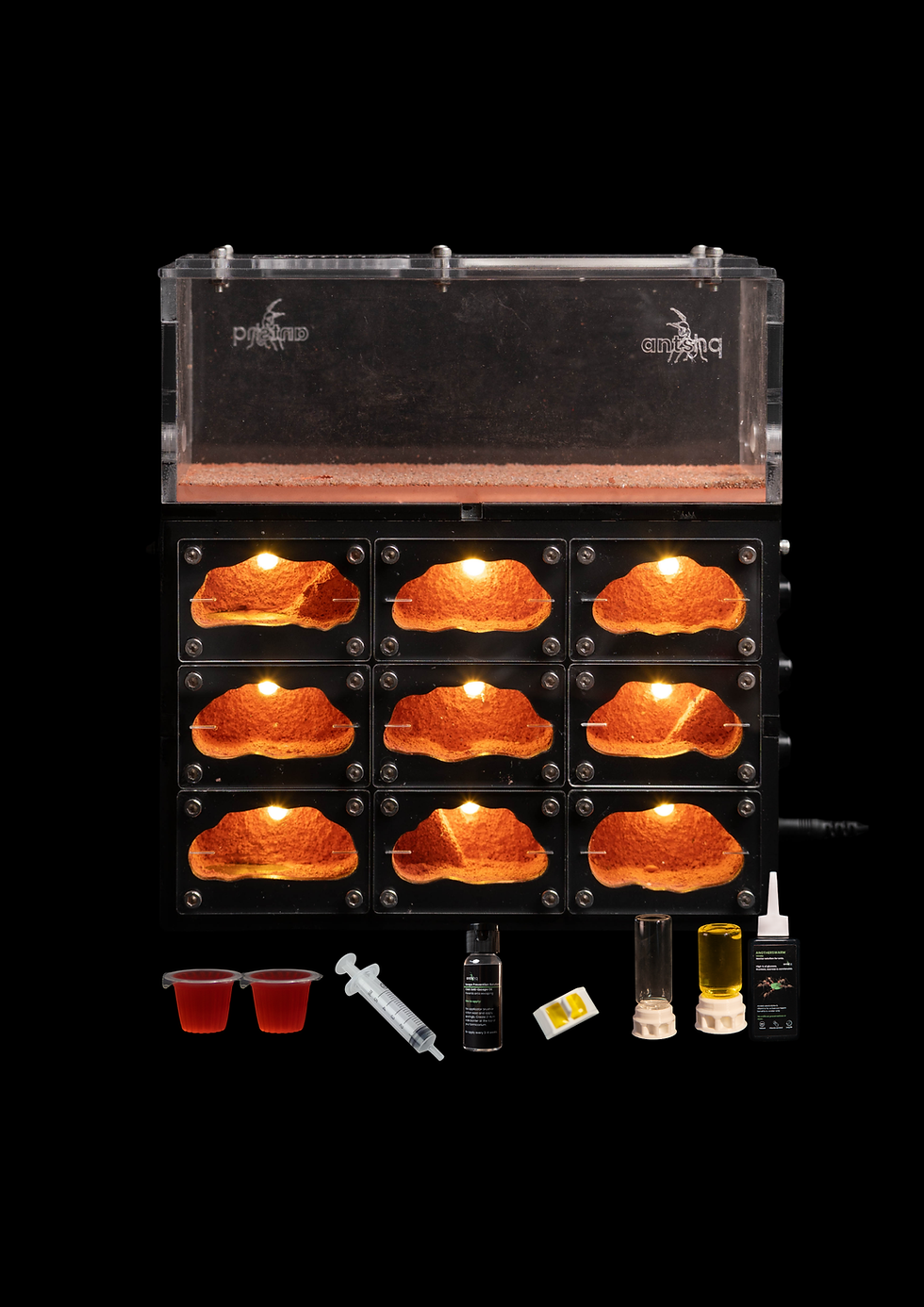
Aphaenogaster splendida
Aphaenogaster splendida is a beautiful Mediterranean species known for its striking yellow-orange colouration, slender build and energetic foraging behaviour. Native across parts of the eastern Mediterranean, these ants can be found in a surprisingly wide range of habitats, from shaded rocky areas and stream valleys to stone walls and coastal environments.
Workers are small and slender, generally reaching around 4-6mm, with queens typically measuring approximately 8-9mm. Their bright yellow-orange colouration makes them particularly attractive in the formicarium, while their long legs and antennae give them the fast, agile appearance characteristic of the Aphaenogaster genus.
One of the most interesting things about A. splendida is the variety of habitats in which it has been recorded. In Cyprus, for example, colonies have been found in rocky gorges and around damp areas close to streams, while populations elsewhere have been recorded in shaded stone walls and human-modified environments.
This makes A. splendida an especially interesting species to observe. Rather than being a purely heat-loving desert ant, they appear to favour access to cooler, shaded and moderately humid microhabitats. In captivity, providing a moisture gradient within the nest is therefore important, allowing the colony to choose the conditions it prefers.
Workers are active and enthusiastic foragers, readily accepting a varied diet of sugarsand protein. A constant source of sugar or honey water can be provided alongside regular insect feed such as fruit flies, flies, small roaches and appropriately sized pieces of mealworm. Their relatively small size means smaller prey items are particularly useful for young colonies.
Aphaenogaster splendida are also known for their ability to transport food back collectively to the nest. Providing a varied outworld with suitable naturalistic substrate can make feeding time particularly interesting to watch, as workers will actively investigate their surroundings and carry food back to the colony.
A temperature range of around 22–27°C is a good starting point during the active season, with a gentle gradient allowing the ants to move between warmer and cooler areas. The nest should have access to moderate humidity (50-60%), while the outworld can remain considerably drier.
As a Mediterranean species, A. splendida is expected to experience a seasonal reduction in activity, and many keepers provide a winter resting period. Exact requirements are not particularly well documented, so wintering should be approached conservatively and based on the colony's seasonal behaviour rather than forcing a prolonged cold period.
Despite their small size, these ants can be surprisingly quick, so good escape prevention is essential.
Overall, Aphaenogaster splendida is a fantastic species for anyone looking for something colourful, active and a little different from the typical Mediterranean ants in your collection.
Important: It is illegal and strictly frowned upon to release any non-native ants into the wild.
.png)